
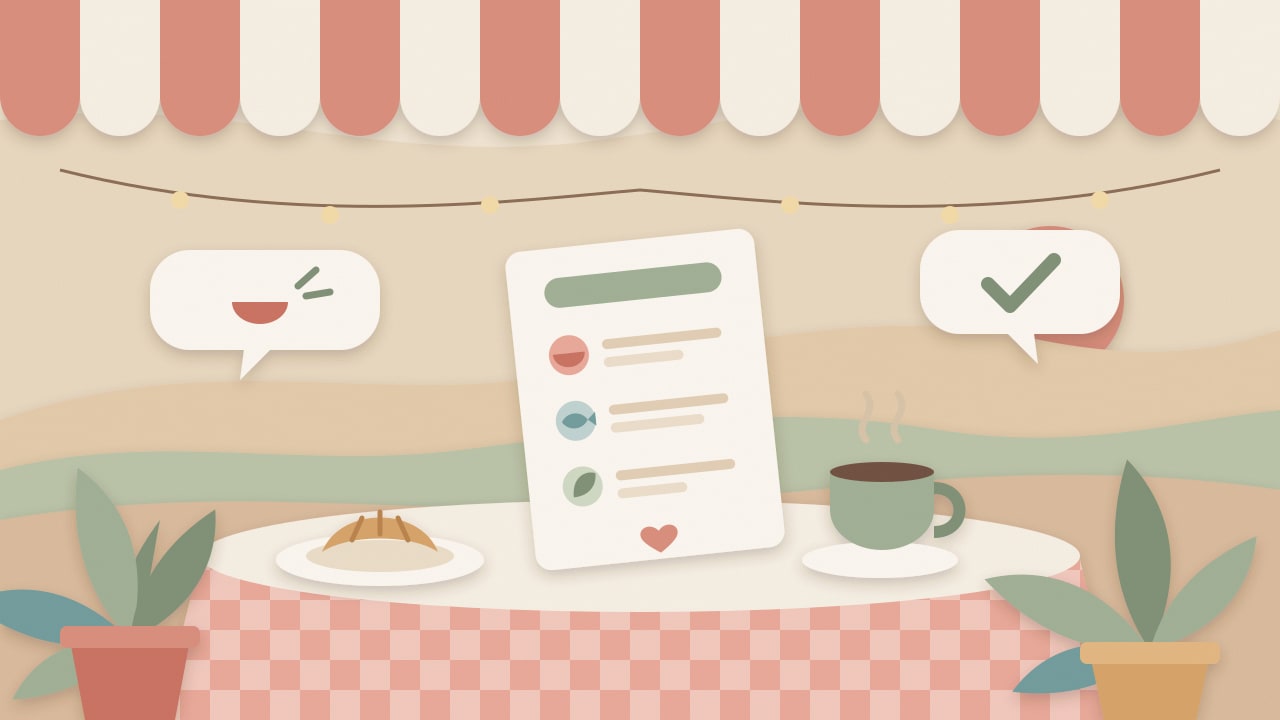
The menu arrives. The restaurant is loud, the typeface is decorative, and three items appear to be daily specials written by hand. You have been studying the language for months — but menus have a special talent for making prepared learners feel suddenly unprepared.
The good news: you were never supposed to memorize every possible dish name. Menus are localized, seasonal, and creatively spelled. Even fluent residents encounter unfamiliar items. Confidence abroad comes not from carrying a mental encyclopedia, but from knowing what to do when a word is new — without freezing or defaulting to pointing at the first picture on the wall.
Why Menus Are Unusually Hard
Restaurant language stacks several challenges at once:
- Proper nouns disguised as food — regional cheeses, wines, cuts of meat, and place names that do not translate literally
- Abbreviations and shorthand — kitchen slang on chalkboards and lunch boards
- Borrowed words — terms imported from other languages with local pronunciation
- Implicit culture — dishes everyone locally knows but tourists have never seen named
- Time pressure — someone is waiting for you to decide
Phrasebooks excel at "I would like water" and struggle with "smoked eel with pickled mustard stem." That is not a flaw in your preparation. It is a flaw in assuming preparation should be exhaustive.
What Actually Helps at the Table
Anchor words, not full menus
Before you travel, learn a small set of category words — chicken, fish, vegetarian, spicy, soup, grilled, fried, dessert, allergy — rather than fifty dish names you may never see. Categories let you navigate when specifics fail.
Ingredients over dish names
When a dish title is opaque, individual ingredient words often still inform your choice. Scan for proteins, allergens, and cooking methods you recognize or want to avoid.
Questions are a legitimate strategy
"What is this?" and "What do you recommend?" are complete tools. Polite curiosity beats silent guessing. Staff in tourist areas have answered these questions thousands of times.
Lookup in the moment is allowed
There is no language-learning rule that says you must decide from memory while someone hovers. A ten-second glance at a definition beats ordering something you did not intend because pride got in the way.
HyperSense's Live Camera Mode is especially useful here: point at the menu line — printed or handwritten if legible — and read a definition or translation while the item is still in context. You see the word, the surrounding description, and the answer at once, without opening a separate app and losing your place on a crowded page.
The Social Part Matters Too
Ordering is not a vocabulary test. It is a small social interaction. Native speakers care less about perfect grammar than about clear intent and basic courtesy. A smile, a please, and a honest "I am learning" resolve more tension than a perfectly conjugated verb used with the wrong dish.
If you misorder, it is rarely catastrophic. Most restaurants fix, swap, or clarify. The stories travelers retell are usually about surprise discoveries, not linguistic ruin.
A Simple Decision Framework When You Are Stuck
When you hit a wall, run this sequence silently:
- Do I recognize any ingredient or cooking method? If yes, use that to decide.
- Is there an English word borrowed or a cognate hiding in the name? If yes, guess cautiously.
- Can I ask a short question? If yes, ask.
- Can I scan it quickly? If yes, look it up before you commit.
- Can I order something simpler and observe what others are eating? If yes, defer ambition to the next visit.
This order protects flow. You are not failing; you are navigating with the tools available.
After the Meal: Build Your Personal Food Vocabulary
The words you looked up at a real table are gold. They came with smell, texture, price, and memory attached. Save the ones you want to remember to your Library — HyperSense lets you bookmark words manually when they matter to you. Everything you scanned during the trip also lands in Recent Words automatically, so you can review later even if you forgot to save in the moment.
Over time you develop a personal food vocabulary shaped by what you actually eat, not what a generic list guessed you might.
The Takeaway
You do not need to memorize every menu before you travel. You need category words, polite repair phrases, and a fast way to understand unfamiliar lines when they appear in front of you.
Menus will always contain surprises. That is part of the point. With the right habits — and a camera-ready lookup when you need it — those surprises become discoveries instead of stress tests.
Allergies and dietary restrictions are serious. When in doubt, ask directly and use clear, simple language — do not rely on translation alone for medical or safety-critical information.